Wednesday, August 5, 2020

SEC reportedly investigating Kodak’s government loan and stock spike following Trump deal

Our mission to help you navigate the new normal is fueled by subscribers. To enjoy unlimited access to our journalism, subscribe today.

The Securities and Exchange Commission is reportedly investigating the circumstances around Kodak’s announcement last week that it had won a $765 million government loan to manufacture pharmaceutical ingredients—a deal that sent the legacy camera firm’s soaring.

While the agency’s probe is at an early stage, the Wall Street Journal reports that the SEC is looking into Kodak’s disclosure of the loan, which began to leak on Monday, July 27—one day before the official announcement that prompted a massive spike in the company’s theretofore struggling stock price.

Kodak’s trading volumes and share price were already on the rise before the announcement was made, a dynamic seemingly tied to leaks disseminated by local news outlets in the company’s hometown of Rochester, N.Y. The SEC is said to be scrutinizing Kodak’s handling of the announcement, according to the WSJ, to determine whether it fell afoul of disclosure requirements for publicly traded companies.

News of the SEC’s investigation comes one day after Sen. Elizabeth Warren (D-Mass.) sent a letter to SEC chairman Jay Clayton, urging him to “investigate potential incidents of insider trading” related to Kodak’s deal with the U.S. government. 

In addition to criticizing Kodak’s handling of the disclosure, Warren raised questions over stock purchases made by the company’s board of directors—including chairman and CEO Jim Continenza—in advance of the announcement, “at a time when Kodak and the Trump administration were negotiating the deal in secret.”

A Kodak spokesperson told Fortune that the company “intends to fully cooperate with any potential inquiries.” Representatives for the SEC declined to comment.

The clouds forming over Kodak and its handling of the loan disclosure is putting a damper on its share price, which was down 3% at Tuesday’s close, to $14.40 per share. While that’s a significant decline from the $33.20 per share it closed at last Wednesday, it’s still up considerably from the $2-plus per share territory that Kodak had struggled to break out of since the start of 2019.

Update, August 4, 2020: This story has been updated to include comment from Kodak and the SEC.

More must-read finance coverage from Fortune:


* This article was originally published here

Monday, August 3, 2020

In the biggest health care deal of the year, Siemens arm buys cancer treatment specialists for $16.4 billion

Siemens Healthineers agreed to buy Varian Medical Systems for about $16.4 billion in cash in the biggest medical acquisition of the year.

The German medical technology company offered $177.5 a share for the Palo Alto, California-based business, 24% more than its closing price on Friday. The bid will be financed through both debt and equity, Siemens Healthineers said in a statement on Sunday. Bloomberg was first to report the offer on Saturday.

The deal would give Healthineers a sizable market share in the rapidly growing field of cancer treatment where it has little presence currently. Siemens Healthineers said the purchase will a have a positive effect on earnings per share withing the first 12 months of the closing.

The acquisition comes amid early signs of a pickup in deals after the spread of the coronavirus and a worsening economic outlook damped sentiment this year. Deal activity in the medical devices industry is also on the rise, with Thermo Fisher Scientific Inc.’s proposed acquisition of Qiagen NV for more than $10 billion and Smiths Group Plc mulling the sale of its medical equipment unit.

The purchase will bring together two partners that have collaborated for more than a decade in areas such as radiotherapy diagnostics for cancer treatments.

Varian recently traded at 38 times estimated earnings, compared with a multiple of 18 for the S&P 500 Health Care index. The company’s shares are little changed this year, compared with a 3.4% advance in the S&P health index, leaving Varian with a market value of about $13 billion.

Healthineers will finance the acquisition through a 15.2 billion-euro ($17.9 billion) bridge loan from Siemens AG, followed by a capital increase this year that the parent company will not participate in.

As a result, Siemen’s stake in Healthineers will decline to about 72% from 85%, Siemens said in a statement. The planned dilution of Siemens’s holding could pave the way for Healthineers to enter into Germany’s benchmark DAX Index.

Healthineers will look at possible inclusion next year, Chief Financial Officer Jochen Schmitz said in an interview. The Index has seen more turmoil than usual recently, with the exit of Lufthansa AG after 32 years, and Commerzbank AG.

“It won’t be a short-term topic, but one we can look at next year,” Schmitz said.

Healthineers, which spun off from Siemens in 2018, has advanced 2.7% this year, boosting its market capitalization to 43.6 billion euros. Revenue in the third quarter was 3.31 billion euros while earnings before interest and taxes reached 461 million euros, the company said Sunday. The company also expects full-year earnings per share of between 1.54 euro and 1.62 euro, compared with 1.57 euro last year

Chief Executive Officer Bernd Montag said at the end of 2019 that the company’s next acquisition would be “close to home.” “We’re not going to start doing, like, pacemakers, because it does not fit into our portfolio,” Montag said in an interview at the time.

More must-read international coverage from Fortune:


* This article was originally published here

Wednesday, July 29, 2020

PPP part 3? Everything you need to know about the proposed expansion of the small business loan program

Our mission to help you navigate the new normal is fueled by subscribers. To enjoy unlimited access to our journalism, subscribe today.

The emergency funding program for small businesses may be getting a revamp via a new proposal—but this time, loans would only go to the smallest, hardest-hit businesses.

Senate Republicans Marco Rubio (R-FL) and Susan Collins (R-ME) released a new proposal late Monday that would give small, struggling businesses the option to take out an additional Paycheck Protection Program loan, tapping $190 billion in funds Congress would provide under the proposal.

Sen. Rubio urged Congress to “take action to help industries and businesses, especially minority-owned small businesses and those in low-income communities, that have been hit hard by the COVID-19 pandemic,” he said in a statement. He earlier teased the proposal last week, saying in a video on Twitter that the new eligibility requirements would help ensure that “the money goes further and reaches more of these businesses, smaller businesses.”

The proposal comes less than two weeks before the PPP extension period is set to expire on August 8. And according to a new survey released Monday by the National Federation of Independent Businesses, some 46% of PPP loan recipients said they’d need more financial support in the next 12 months, while 71% said they had already spent their loans.

“Even for those owners who have exhausted their PPP loan, the economic conditions have not yet returned to levels that can support business activity for many,” Holly Wade, the NFIB director of research & policy analysis, said in a statement with the release.

Who is eligible?

Under the new proposal, only businesses with 300 or fewer employees would be eligible to take out a second PPP loan. Additionally, the business must demonstrate it took a 50% or more hit to revenue owing to the crisis (in the 1st and 2nd quarters of 2020 versus 2019).

Truly small businesses, those with 10 employees or under, would also get a separate pot of funds (some proposed $25 billion) to “ensure equitable access”—a problem that plagued initial rounds of the program as funds went to some large and public companies. Under the Republican proposal, businesses in accommodation and food services would be able to get loans so long as each location didn’t have more than 300 employees, but loans would be capped at $2 million in total.

Borrowers for the second PPP loans would be able to get 2.5 times their average monthly payroll costs for the previous year up to $2 million, according to the proposal (however, the sum of the two loans couldn’t be more than $10 million). The loans would need to be used 60/40 on payroll and non-payroll expenses, and costs covered by loan would also now include personal protective equipment (PPE) and property damage costs incurred before January 1, 2021.

Notably, the proposal draws a harder line for who is not eligible for the program—including public companies (which controversially ended up getting loans during previous rounds of the program), those affiliated with Chinese entities, and financial services companies that already took a PPP loan in the 1st round.

Changes to PPP loans, new long-term loans

In addition to a second shot at PPP loans, the proposal would also make some changes to existing loans and how they may be used.

In the proposal, funds would now be able to be used on PPE, expenses for cloud computing, software, HR and accounting needs, property damage costs, and more.

Plus, the Rubio-Collins proposal would make changes to the traditional Small Business Administration 7(a) loan, allowing “seasonal businesses and businesses located in low-income communities” with 500 or fewer employees and a 50% hit to revenue to tap up to a $10 million loan with a 20-year maturity at a fixed 1% interest rate.

The proposal comes as Republicans announced a new stimulus package on Monday to the tune of $1 trillion, which has already been met with pushback on the opposite side the aisle.

Democratic Sen. Ben Cardin (D-Md) called the plan “an overdue and inadequate response to the challenges our country is facing,” and Sen. Rubio said on Fox on Tuesday morning that passing the bill through the Democrat-controlled House is “not going to be easy” and that it might take “two weeks or one week or three weeks,” he said. But he added, “I’m confident we ultimately will do something that’s meaningful.”

More must-read finance coverage from Fortune:


* This article was originally published here

Friday, July 24, 2020

Elon Musk opposes second stimulus package—even after taking a $465 million government loan during the Great Recession

Subscribe to Data Sheet, a daily brief on the business of tech, delivered free to your inbox.

Elon Musk, whose Tesla Inc. was a major beneficiary of government stimulus in the wake of the last global financial crisis, has soured on the concept.

The outspoken chief executive officer of both Tesla and U.S. government contractor SpaceX tweeted Friday that “another government stimulus package is not in the best interests of the people,” in his opinion.

A decade before Tesla became the world’s most valuable automaker by market capitalization, the company survived the Great Recession by the skin of its teeth—in Musk’s own words—thanks in part to a $465 million federal loan to design electric vehicles and build them in Fremont, California. The company then went publicrepaid the loan early and now employs about 20,000 people in the Bay Area alone.

Before Tesla obtained the federal loan, Musk was clear: without government support, the company—then a boutique maker of a $109,000 sports car—would have to delay the rollout of a less expensive electric sedan.

“We can’t move forward with that without a major amount of capital,” the CEO said in a December 2008 interview. “If we don’t get any government funding then what we need to do is we need to wait until the capital markets recover, which could be a year or two years from now.”

Congress is now working on another stimulus package to help revive a U.S. economy ravaged by the coronavirus pandemic.

More must-read finance coverage from Fortune:


* This article was originally published here

Thursday, July 23, 2020

Subprime lending giant CardWorks offers a glimpse into consumers’ wallets—and some surprising clues about the economy

No one in America better understands the risks and rewards of financing America’s wage-earning consumers—the folks locked out of traditional banking but hungry for credit—than Don Berman. The CEO of CardWorks, America’s second-biggest subprime credit card lender, tells Fortune that his customers learned plenty about the benefits of prudence from the financial crisis, and believe it or not, they’re in better shape than before the pandemic struck. Berman is no Pollyanna; he warns that we won’t see the full picture until the waves of government support run out. Still, his best bet is that the low-income consumers who lose their jobs first, but then get hired back fastest, will on a relative basis actually outperform middle-class borrowers through the crisis.

Analysts and money managers are a lot more pessimistic. And their doubts recently helped scotch a big merger deal for CardWorks that would have brought Berman over $1 billion.

When Ally Financial, the nation’s leading auto lender, announced that it was purchasing CardWorks for $2.65 billion on Feb. 18, Wall Street hated the deal. Ally’s shares slid 11.5% that day to their lowest level since 2014. That the announcement caused such backlash is somewhat surprising, given that jobs were plentiful, and low-income borrowers were making their payments most reliably, and suffering the fewest defaults, in decades.

But investors fretted that Ally was paying a big price at the peak of an unusually strong credit cycle. When the inevitable recession arrived, the skeptics worried, subprime borrowers would revert from their unusually terrific payments record to the normal level of much higher delinquencies. Then the coronavirus crisis pummeled the outlook for all consumer credit, but especially for the low-income folks hardest hit by unemployment, making the merger look even more like a loser and sharpening the descent in Ally’s stock.

The second-largest pending financial services merger of 2020, behind only Morgan Stanley’s $13 billion acquisition of eTrade, soon fell victim to the pandemic. On June 24, Ally issued a press release declaring that it had “mutually agreed” with CardWorks to scuttle the union. Jeffrey J. Brown, Ally’s CEO, provided no details on the reason for the breakup, stating only, “Given the unprecedented market conditions resulting from the COVID-19 global pandemic, Don Berman and I…believe it’s in the best interests of our customers and stakeholders to terminate the agreement.” Wall Street cheered the breakup, boosting Ally’s shares that day by 12%.

The companies’ decision to walk, in and of itself, raised a red alert for money managers that specialize in backing low-income lenders. They reckoned that the cancellation was a bellwether for a meltdown in subprime. As one prominent investor who has prospered by betting on the sector told me on background: “My theory is that abandoning the deal showed that there would be all kinds of problems coming in consumer finance.” He also noted that the key metric for subprime is unemployment, and that “when you have a hiccup in unemployment, you have problems.” He went on to say that to nix the deal, both sides must have seen far worse times ahead than even the scale of delinquencies the markets were expecting.

It was the death of the Ally-CardWorks merger that confirmed his worst fears: “I thought there might be a soft landing up until the CardWorks deal got canceled.”

On July 9 I spoke to Don Berman to get his firsthand view of how America’s wage earners will weather the crisis. I asked Berman if he and Ally had scotched the merger because of severe problems brewing in his portfolio. Berman dismissed that notion with a single word: “Hogwash.”

Born in the Bronx

Berman provided a brief profile of CardWorks and its borrowers, and his own story growing up in what he calls a “subprime family in the Bronx.” Berman’s father owned modest restaurants, and his mother was a schoolteacher. “We lived in a five-story walkup,” he recalls. “I shared a bedroom with my brother until I was 15.” Berman made the freshman basketball team at the University of Maryland. But when he came home for Thanksgiving that year and told his mom, she ended his hoop dreams for good. “Paying for college was a real stretch,” he says. “My mother was the only person allowed to call me Donald. She told me, ‘Donald, you have a choice. You either keep going to college and study, or leave college and play basketball.’ The message was clear–––if I played freshman year, she’d stop paying my tuition.” The strapping six-footer sports a clean-shaven Mr. Clean dome that he keeps barren using a Gillette razor every morning.

Postcollege he quit his job running sales and marketing for a credit card processor to found CardWorks in 1987. From 2016 to 2019, in a great market where the pool of subprime customers kept growing, lifting total balances, while delinquencies stayed extremely low, Berman grew revenues 30%, to nearly $1.1 billion, and pretax profits 46%, to $343 million. Today, CardWorks remains privately held, and Berman holds the majority of the shares.

Although CardWorks also finances boats and trailers, and processes payments for merchants and banks, the bulk of its business by far is credit cards. “Big banks have to worry about trading, real estate lending, and 10 other sectors,” he told me. “Our business is very monoline. We worry mainly about one kind of risk, for credit card loans.”

CardWorks provides financing through its captive lender, Merrick Bank. It boasts almost 4 million credit card accounts. “We’re in the top 20 of all credit card companies,” says Berman. But he’s a giant in his field: In subprime, CardWorks’ $3.8 billion in balances ranks second only to Capital One’s. Of course, default rates are a lot higher in subprime than prime. CardWorks charges customers a range of between 17.9% and 29.9%; its average rate is 23.3% on balances. Those high rates cover the nonpayments, which run 10% to 12%, versus 3% to 5% for prime customers.

The typical CardWorks customer is a wage earner making $15 to $20 an hour, contributing to a total family income of $45,000 to $65,000 a year. Their average credit scores are 630, about the average for subprime borrowers. These aren’t the folks who bank at JPMorgan Chase or Wells Fargo. Yet, says Berman, their slender means forces these families to be in some ways more careful with their finances than high earners. “Subprime consumers live their entire lives in their own recession,” he notes. “They have no excess disposable income. Eighty percent of our borrowers are renters, not homeowners, where it’s practically the reverse for the middle class and up.”

While foreseeing tougher times ahead, Berman expresses amazement at how well his customers are faring so far. “What we see from our portfolio’s performance is that our consumer seems to be in better condition today than before the pandemic,” he says. “To a large degree it’s because of actions taken by the government through stimulus checks and unemployment benefits. But it’s about being much more careful as well.”

A different approach to this recession

CardWorks’ borrowers, he observes, are treading far more carefully than in the previous recessions of 2001 and 2008. “Going into those downturns, they were credit needy. They wanted to make sure they had enough credit to live their lives when they lost jobs.” CardWorks measures their hunger for new borrowing by the response rate to its mailings offering new or extra credit. “When the economy was worsening, we’d see response rates double from 3% to 6%,” he says. “If a family had a $1,000 credit line at Merrick, they’d on average have pulled down $650, and that number would rise to $850 or $900, from 65% to as much as 90% utilization.”

But in the COVID-19 crisis, his customers are getting more prudent and less leveraged. “They’re charging less and paying down their balances,” says Berman. “This is also happening on the national level. The latest numbers show people paying down revolving credit balances at the fastest rate in 20 years.” Instead of surging from 3% to 6%, CardWorks’ response rates dropped by half to 1.5%. Customers who in previous recessions raised balances on their credit lines from 65% to 90% are on average lowering their utilization to 62%. “I’ve never seen anything like it in a recession,” he says. “People are being far more judicious than before the crisis.”

Berman attributes that shift in behavior to two factors. First, borrowers learned tough lessons in the values of frugality from the financial crisis. “My average borrower is around 45,” he says. “He or she lived through 2008 and 2009. People came to appreciate the importance of strong FICO scores. Keeping a good credit score ensures that they can get additional credit if they need it, or qualify for a mortgage.” Second, Berman believes that people sheltering in place simply don’t have as many pleasures to swipe their cards for, compared to being out on the street and tempted by movie theaters, stores, and restaurants. “They just can’t spend as much as they usually do,” he says.

What’s left is mainly shopping online. For Berman, the digital experience is much less conducive to impulse buying than roaming boutiques and malls. “My belief is that people are a lot less spontaneous and rash when the merchandise isn’t physically in front of them,” he says. “That’s why there’s so much abandonment in e-commerce. When consumers shop on the Internet, they often get to the checkout page and don’t complete the purchase. There’s no excitement there. It’s tedious versus being in a store.” The upshot is that subprime families are either banking a higher portion of their meager incomes in the lockdown, or conserving their savings far more carefully than in prior recessions.

The unemployment picture

Still, Berman warns that credit losses will be substantial because of the spike in unemployment and that it’s impossible to fully assess the damage until government support runs out. “Based on unemployment, you’d have to be foolish not to increase your loan loss reserves,” he says. “We’re adding a lot to our reserves because the stimulus and benefits will end at some point, and joblessness will settle in the low-double digits.” He says that if the government provides another stimulus package, as he expects, it will take until December or the first quarter of 2021 to gauge how deep the losses will run.

Overall, Berman is what he calls “cautiously optimistic” that subprime will emerge without suffering anything like the deep losses that worried investors believed the Ally bust-up was signaling. In part, he says, this downturn isn’t being caused by a “fundamental weakness” in the economy. “In the Great Recession, we had a housing meltdown. And it was mainly because of defaults by prime, not subprime borrowers. This time it’s not a financially driven recession, it’s a downturn driven by an event, as opposed to a fundamental disruption like the housing crisis.”

He adds that the timeline for recessions is different for subprime workers. “They enter the recession earlier, and exit sooner,” he told me. “These are people making $15 or $20 an hour working in restaurants, hotels, or bars. The first jobs to get cut are entry-level jobs. Those workers get laid off right when business drops, at the start of the downturn. They’re also the first to be rehired when business starts to pick up, and the restaurants, bars and hotels reopen.”

Hence, his borrowers will lose income for a briefer period than salaried workers. “Think about the tens of thousands of salaried people being laid off by the airlines,” he says. “They include pilots making $250,000 a year. They may not return for a couple of years.”

In conclusion, Berman notes that CardWorks suffered significant loan losses in the Great Recession, but those losses didn’t last nearly as long as for prime customers. He expects a replay of the first-in, first-out scenario that cushioned the hit in the Great Recession. For Berman to be proved right, his subprimers can’t stay out of work too long. But unless we’re in for years of elevated unemployment, his prediction that wage earners will get through this relatively unscathed is probably the best bet.

It’s also instructive that Berman and his shareholders had a strong motive to kill the Ally-CardWorks deal, so that its demise may have nothing to do with fears of a crash in subprime credit. Berman and his fellow owners were getting $1.4 billion in cash and $1.3 billion in stock at Ally’s pre-announcement price of $32.85. But the merger agreement contained an escape for CardWorks: If Ally’s price fell by 15% for an extended period, CardWorks could walk with no penalty. By late June Ally’s shares had dropped to around $18, far below that trigger point. The amount that CardWorks’ shareholder, of whom Berman is the largest, would have received shrank almost $600 million from when the deal was announced.

It’s a sign of Berman’s faith in his customers’ prospects, even in these rough times, that he agreed to nix a deal that would have brought him over $1 billion. He’s convinced his borrowers’ fundamental strength, holding jobs that are easier to replace, means that “our portfolio will perform very well as unemployment falls.” To be sure, no one knows the market better, or has better models, than Berman. The question is whether all that expertise can reasonably gauge the future damage from a crisis unlike any other.

More must-read finance coverage from Fortune:


* This article was originally published here

Monday, July 20, 2020

How one toy store owner used his PPP loan to pivot online—and saw sales soar

Subscribe to How To Reopen, our weekly newsletter on what it takes to reboot business in the midst of a pandemic.

It was in mid-March when the orders came to shut down stores.

For business owners like Brad Ruoho, who owns Minnesota-based toy store Legacy Toys, the pandemic was especially brutal. He founded the now-seven store company in 2012 in the Northwoods of Minnesota with a key focus: It’s “very interactive, hands-on, lots of stuff for the kids to do,” he tells Fortune. In fact, “In our first store, we had a full tree we built in the middle of the store and we built a saltwater aquarium.” Interactive installments like those feature prominently in Ruoho’s 7,500 square-foot store in the Mall of America—a way to entice kids to have “more hands on play, interactive play, rather than just all video games,” he says.

A shopper exits the Legacy Toys store at the Mall of America in Bloomington, Minnesota. Photo by Kerem Yucel/AFP via Getty Images
KEREM YUCEL—AFP/Getty Images

Three new locations had been open for less than a year when the order came to shut down. Ruoho’s employee count dropped from around 80 to only four across seven stores as he furloughed most of the staff. Ruoho says he had to quickly pivot his business and accelerate plans (which were already in motion before the pandemic) to build an online store immediately.

“Fortunately we were able to launch the new website quickly and it just instantly turned into thousands and thousands of sales happening all the time. Then we were pivoting to figure out, how do we ship all of this stuff? How do we package all this up? We quickly adapted and tried to make it work,” he says. In addition to fast-tracking plans to launch a website, Legacy Toys (like many retail stores) has started doing curbside pickup and even having employees deliver within a 10-mile radius of their stores, which reopened in the middle of June.

But the pivot likely wouldn’t have be possible without financial help to bring back employees to work on the company’s new website.

Built as a bridge loan for small businesses to ride out the shutdowns, the Small Business Administration’s $670 billion Paycheck Protection Program was set up hurriedly to give small businesses forgivable loans up to $10 million each. But the program has been engulfed in controversy nearly from the onset, as many small businesses were initially shut out of the program while funds went to large, (in some cases) publicly-traded companies. Still, the program has thus far doled out emergency loans (which can be converted into grants if used properly) to nearly 5 million businesses.

Legacy Toys applied “right away” for a PPP loan, and received $160,000. According to Ruoho, the loan was “a huge piece of what has been able to keep us going.”

After Legacy Toys launched the new site, early sales plus the PPP loan allowed the company to bring back roughly 60% of their pre-COVID workforce, says Ruoho. Since the online store took off, Ruoho says he’s hired new jobs in IT and marketing to help boost the growing new part of their business. Indeed, Ruoho says Legacy Toys is now shipping internationally for the first time, to customers who “have never heard of us before” and found the company through Google Shopping and other channels. In fact, the website sales now equal Legacy Toy’s pre-pandemic sales across all of their stores.

“We grew so quickly from literally shipping nothing to shipping several hundred packages a day,” he notes. One hot seller, says Ruoho: “We were just shipping ridiculous loads of puzzles—500, 600 puzzles a day.”

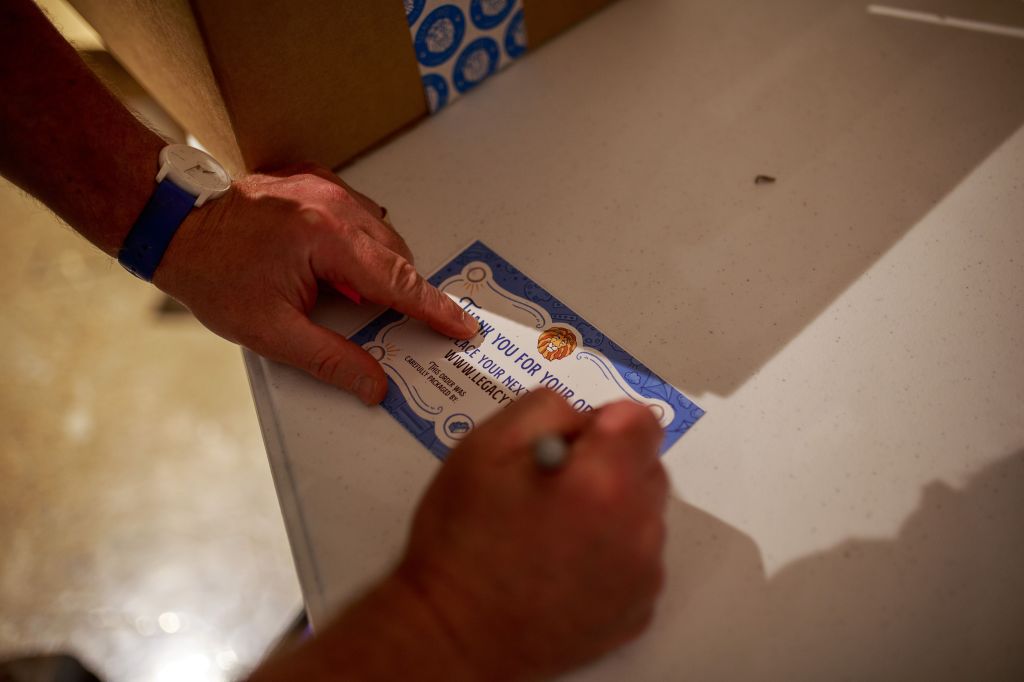
Legacy Toys used its PPP loan to build out an e-commerce business which has seen huge demand. Photo by Kerem Yucel / AFP via Getty Images.
KEREM YUCEL—AFP/Getty Images

Yet while the federal loan (and gumption of his employees) has helped Ruoho’s business muscle through the pandemic thus far, what happens next is still up in the air. The fate of malls and retail stores is a question mark as cases keep spiking across the country, and Ruoho still hasn’t been able to rehire all of his employees.

But Ruoho is determined to make the best of things in the meantime—He says the company is working with educators to develop a curriculum and products for the slew of families who expect to be homeschooling their children come fall.

“We see that as an opportunity and necessity for parents. We can be a resource for them and help them out,” he says.

More must-read finance coverage from Fortune:


* This article was originally published here

Friday, July 17, 2020

Feds bust Texas man for using PPP loan of nearly $1 million on cryptocurrency

Joshua Argires received nearly $1 million from the federal Paycheck Protection Program to help 51 employees at his “Texas Barbecue” to weather the COVID outbreak.

But according to federal law enforcement, Texas Barbecue had no employees and only a website with nothing for sale. Meanwhile, Argiries allegedly sent the $956,250 he received to an account at the cryptocurrency company Coinbase via a series of five wire transfers.

On Tuesday, the Department of Justice announced Argiries has been charged with wire fraud, bank fraud and engaging in unlawful monetary transactions.

The Justice Department did not explain how it detected the fraud but a criminal complaint describes a series of curious circumstances. These include Argiries’ PPP application, which suggested he would pay 51 Texas Barbecue’s employees an average of $90,000 a month.

“Such a high average salary for a barbecue operation raises further suspicion,” the complaint reads.

Meanwhile, the complaint also recounts conversations between Argiries and the Houston credit union that administered the PPP funds. In one conversation, a credit union staffer asked Argiries what he thought of Coinbase—which does not offer payroll services.

“I don’t really manage that aspect of it, but I believe it pays out employees, like, through that,” the complaint alleges.

According to the Justice Department, all of the PPP funds for Texas Barbecue remained in the Coinbase account, where Argiries made several cryptocurrency purchases that made a profit.

In a separate alleged scam, Argiries received $160,657 in PPP funds for a fictitious business called Houston Landscaping. The complaint alleges he withdrew several thousand dollars of these funds at local ATMs.

Argiries has been released on $25,000 bail. A public defender for Argiries did not immediately return a request for comment. The federal government has previously invited anyone who suspects stimulus fraud to report it.

More must-read finance coverage from Fortune:


* This article was originally published here

Wednesday, July 15, 2020

Meet the one-branch bank that did more PPP lending than Citi

This is the web version of The Ledger, Fortune’s weekly newsletter covering financial technology and cryptocurrency. Sign up here to get it free in your inbox.

When the data for Paycheck Protection Program, or PPP, lending finally came out last week, there was plenty to gawk at: there were public companies, pro sports teams, the Ayn Rand Institute—and a slew of errors.

What caught my eye, however, was the list of the top 15 PPP lenders. There are, of course, the usual suspects—JPMorgan Chase and Bank of America, which each oversee trillions of dollars in assets, are at the top of the list, having made more than $25 billion in PPP loans apiece. But No. 12, punching far above its weight and coming in ahead of Wall Street mainstays like Citizens Bank and BMO Harris, was a little-known New Jersey institution called Cross River Bank.

You may not have heard of Cross River. Until recently, it was known for being the bona fide bank behind financial technology companies that themselves are not technically banks, including cryptocurrency company Coinbase, payment processer Stripe, and consumer financing lender Affirm.

But Cross River, a community bank with only $2.5 billion in assets, made nearly $5.6 billion in PPP loans. That’s up from just $50 million in Small Business Administration-backed loans Cross River did in all of 2019.

To put this into context, Citi, which has more than $2.2 trillion in assets (or nearly 900 times as much money as Cross River), didn’t even make the top 15 lenders. So far, Citi has made about $3.4 billion in PPP loans, the bank disclosed when it reported earnings Tuesday. (A Citi spokesperson says the figure “reflects our smaller size as an SBA lender,” coming in 151st among all Small Business Administration lenders in 2019.)

What’s more, Cross River did all that lending despite giving out smaller loans: Its average loan size was just over $38,000, far less than any of the other banks among the top lenders, most of which averaged loans between $100,000 and $200,000 per business. That means Cross River loaned to more businesses than any other lender but Wells Fargo, Bank of America and JPMorgan—all three of which dwarf Cross River by other metrics. It also means, whereas the big banks prioritized lending to their existing customers which tend to be larger companies, Cross River’s loans went to the mom-and-pop shops and other true small businesses for which the PPP was intended: More than 95% of its borrowers were businesses with 20 employees or fewer.

So how did Cross River, which has only one physical branch, scale up its small business lending so dramatically in such a short time? As it turns out, partnering with fintechs to originate loans may be a more efficient way to serve lots of small businesses than just offering those loans directly under your own banner, particularly in a pandemic. After building a platform to automate PPP loan applications in less than 10 days, Cross River could then partner with more fintechs—now more than 30 in total—to funnel in their customers who wanted the stimulus funds, from non-bank lending companies like BlueVine and Kabbage  to payroll software company Gusto.

“PPP demonstrated that fintech is the great equalizer,” Phil Goldfeder, Cross River’s senior vice president of public affairs, and a former elected official in New York, tells Fortune.

With a largely automated application portal, it didn’t matter whether the businesses were existing customers or how large or small they were; Cross River opened its virtual doors to any prospective PPP borrower—and it’s still accepting loan applications today, as the PPP deadline has been extended.

Cross River’s example may be a bellwether of what the future of finance and lending looks like. Rather than relying on regional branch networks and a bank’s own size, digital players can acquire customers nationally through slick technology and partnerships. (See also Rocket Mortgage, another digitally-focused offering whose parent company just filed for an IPO.)

And even though it seems that the rise of online banking has made brick-and-mortar branches less important, don’t underestimate traditional banks’ ongoing reliance on them. Even the Citi spokesperson, explaining why its PPP lending was relatively minor, told Fortune it was “because we have fewer than 700 branches nationwide and small businesses are typically served through branches.”

The Cross River and fintech model throws that out the virtual window. “It’s a totally different model in terms of how financial services scale,” says John Pitts, head of policy for Plaid, which connects banks including Cross River and others with many major fintech companies to power the data exchange between them. “Some of those community banks are going to be able to really expand their market size and market power, because they’re not going to be tethered to geography.”

Jen Wieczner

@jenwieczner

jen.wieczner@fortune.com


* This article was originally published here

Tuesday, July 14, 2020

Trump administration shelved ‘redlining’ investigations into Bank of America and other lenders, report says

The Trump administration’s top banking regulator has sidelined at least half a dozen investigations into discriminatory lending practices by Bank of America and other banks across the U.S., according to a new report.

The Treasury Department’s Office of the Comptroller of the Currency reportedly closed no fewer than six investigations into banks found to have practiced “redlining” against minority borrowers—despite staff recommendations that fines or other penalties be imposed against those lenders, according to the report by ProPublica and The Capitol Forum.

In the case of Bank of America, OCC examiners found that the nation’s second-largest bank was offering disproportionately fewer loans to minority homebuyers in Philadelphia than it was to white people. But the investigation was met with complaints and resistance from Bank of America, and by September 2018, the OCC’s inquiry was effectively shelved with no sanctions against the bank.

Other banks examined by the OCC for discriminatory practices included Michigan-based Flagstar Bank; Colorado Federal Bank; Chicago-based MB Financial; Atlanta-based Cadence Bank; and Pennsylvania-based Fulton Bank. In each of these cases, OCC investigators found that the banks were treating minority borrowers unfairly—such as charging Black, Latino, and women customers more for mortgages, or holding them to a higher standard to qualify for certain loans.

Despite evidence of wrongdoing in each of these cases, the OCC pursued no actions against the offending banks. Representatives for the OCC and the banks involved declined to comment on the investigations to ProPublica and The Capitol Forum.

While the OCC has historically prioritized the interests of banks over those of bank customers, current and former OCC employees say the balance has shifted even further under the Trump administration, which has seemingly deprioritized civil rights enforcement as part of its overall deregulation of the banking sector.

“We have not always been the biggest defender of consumers,” one veteran OCC attorney told ProPublica and The Capitol Forum. “Lately, though, we are outright hostile.”

Despite the passage of legislation meant to combat and outlaw redlining—such as the Community Reinvestment Act of 1977—discriminatory practices persist across the financial services industry, including in the banking and insurance sectors.

More must-read finance coverage from Fortune:


* This article was originally published here

Monday, July 13, 2020

How To Pay Off SBA COVID-19 EIDL Loan Early: A Walkthrough

Back in March, Congress created two loan programs to help small businesses and the self-employed mitigate the economic impact of the COVID-19 pandemic: the Economic Injury Disaster Loan (EIDL) and the Paycheck Protection Program (PPP). Because we were not sure whether we were able to get either loan, we applied for both (see previous post COVID-19 Loans for Self-Employed: Where to Apply). We ended up getting both loans after a long application process — the EIDL loan directly through the SBA, and the PPP loan through a bank.

Our business stabilized somewhat in recent months. Revenue was down 65% in April compared to April of last year. It was down only 47% in June. It’s still bad but the trend is upward. So we decided to pay off the EIDL loan early.

The EIDL loan is a 30-year loan at 3.75% interest rate. No payments are required during the first year but interest still accrues. There’s no prepayment penalty. When no payments are due yet, the SBA isn’t sending any statement or payment stub. If you’d like to pay the loan off, it’s not obvious how much you need to pay or where to send the payment. I’m showing you what to do if you received the EIDL loan and you’d like to pay it off early or pay back a part of the loan to lower your interest charge,

SBA Loan Number

First you need the SBA loan number for your EIDL loan. This 10-digit number is in the Loan Authorization and Agreement (LA&A) you electronically signed with the SBA. It’s on the beginning of page 2 and also on the upper left of all pages in that document.

SBA CAFS

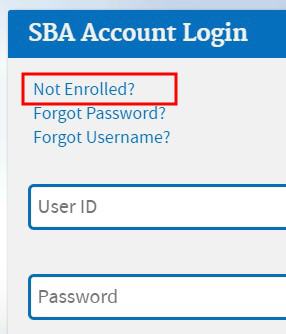
Next you need to register with the SBA’s Capital Access Financial System (CAFS). Click on the “Not Enrolled?” link above the login fields.

register SBA account

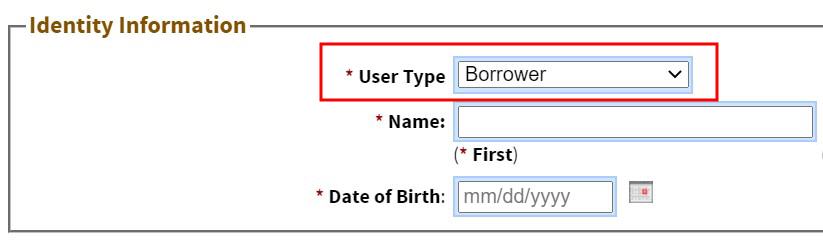
Choose “Borrower” under User Type.

User Type field

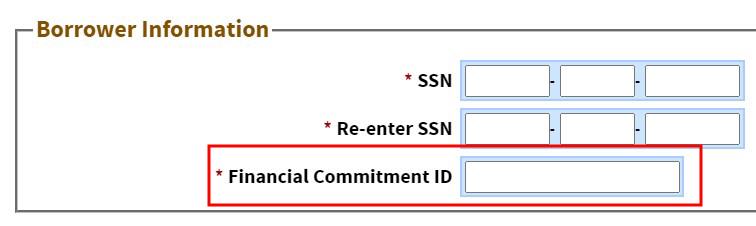
Enter your SBA loan number in the “Financial Commitment ID” field.

Loan Number field

Payoff Amount

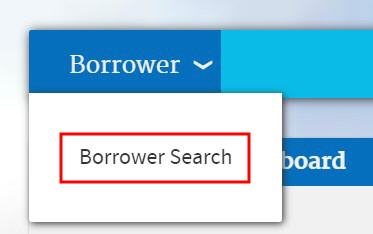
After you successfully register for access, you log in to CAFS with the user ID and password you created. The system will send a one-time PIN to your email address or mobile phone for two-factor authentication. After you get in, at the light blue bar at the top, click on Borrower, and then Borrower Search.

List your loans

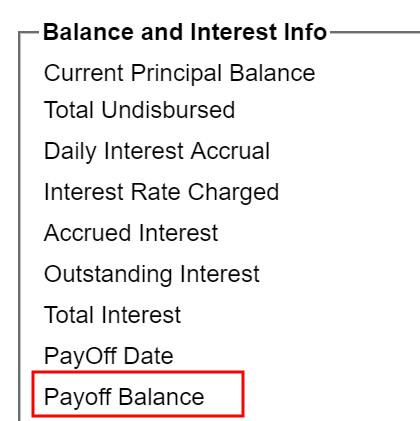
You will see a list of your loans. If you received both the EIDL loan and the PPP loan, you can identify your EIDL loan by the loan number, the loan amount, or the loan type (“DCI”). Click on the EIDL loan. You will see your loan details. If you are trying to pay the loan off, read the Payoff Balance during working hours Monday through Thursday.

loan details

Further down the page, you will see a link that says “Go to pay.gov to make a payment.” So you go there next.

payment link

Pay.gov

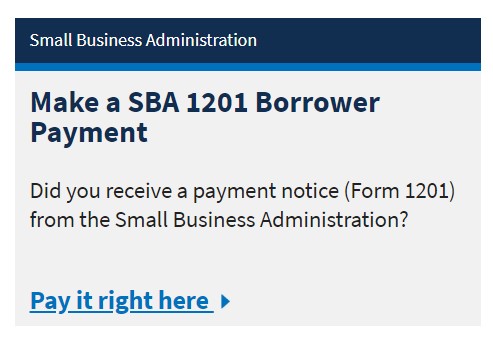
The link just sends you to the home page of pay.gov. This is a multi-purpose website for making many different kinds of payments to the U.S. government. You will see this in the middle of the home page:

SBA loan payment flow

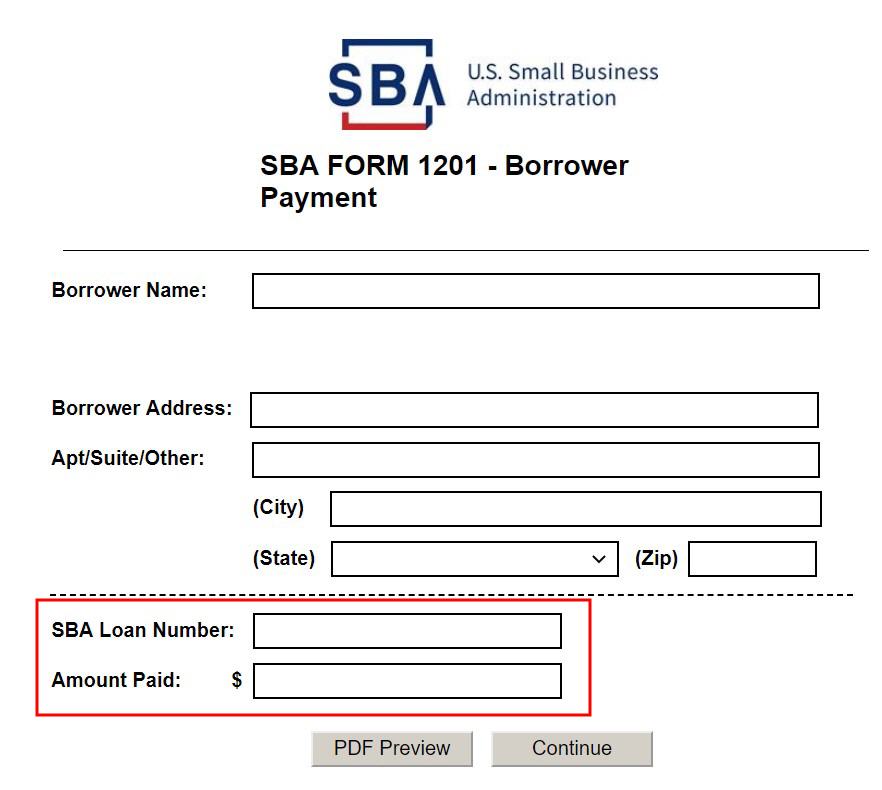
You follow that link even though you don’t really have a payment notice (Form 1201) from the SBA. When you follow along, the crucial information you need are your SBA loan number and the payment amount.

SBA loan number and payment amount

If you are trying to pay the loan off, enter the payoff amount you got from SBA CAFS (you can also make a partial payment). The soonest payment date is the next business day. That’s why if you are trying to pay if off, you need the latest payoff amount during the working hours Monday through Thursday. If you get the payoff amount in the evening or on a Friday, by the time the payment arrives, additional interest may have accrued and your payment will be short.

You will give the routing number and account number of a bank account for the payoff. Pay.gov will debit your account and send the payment to the SBA. You can go back to SBA CAFS after a few days to verify the payment and the loan status.

SBA loan status

You are done when you see the loan status says “Paid in Full.”

The post How To Pay Off SBA COVID-19 EIDL Loan Early: A Walkthrough appeared first on The Finance Buff.


* This article was originally published here

Can an A.I. algorithm help end unfair lending? This company says yes

Our mission to help you navigate the new normal is fueled by subscribers. To enjoy unlimited access to our journalism,  subscribe today . ...